Our Dental Services
Cleanings
A teeth cleaning (also called a prophylaxis), is typically performed every six months. This procedure removes plaque, calculus (solidified plaque that firmly adheres to the tooth), and staining that cannot be removed by your toothbrush or floss. During the cleaning, we will use ultrasonic and hand scaling instruments to break up and remove these deposits gently and effectively. Lastly, the teeth are polished with a special paste that smooths the surfaces of the teeth, making them more resistant to plaque and calculus accumulation.
It is important to schedule regular cleanings and dental exams with your dentist. The average healthy adult with good oral hygiene should visit their dentist for a cleaning and oral exam at least twice a year. Ultimately, your dentist will recommend how often you should visit based on past check-ups and your overall oral health.

Cleanings and Check-ups Save Money
Maintaining a consistent relationship with your dentist and scheduling regular check-ups and cleanings will help save you money in the long run. Oral exams performed by your dentist will ensure that any dental issues are taken care of before they become serious problems.
Some of the things your dentist will look for in an examination are:
- Cavities
- Plaque and Tartar
- Signs of gum disease
- Early signs of oral cancer
- Other potential problems in your X-Rays
- Whitening
Scaling and Root Planing
Scaling and root planing is a procedure that is used to treat gum disease. When you don’t clean your teeth well enough, excessive amounts of plaque can build up. The bacteria in this excess plaque can cause your gums to become inflamed, which is what leads to gum disease. The inflammation will cause your gums to pull away from your teeth, resulting in the formation of little pockets. Plaque becomes lodged in these pockets, which is problematic as you cannot remove it by simply brushing and flossing on your own. If untreated, this can lead to bone loss, and ultimately tooth loss. But don’t worry, as long as you stay up to date on your dental appointments, your dental hygienist should be able to prevent bone and/or tooth loss by using the scaling and root planing procedure. Scaling removes the plaque that forms in the pockets below the gum line. Root planing smooths the roots, making it easier for the gums to reattach to the teeth.
Sealants
While brushing and flossing are the most important measures you need to take to prevent cavities, it can be difficult to adequately clean every surface of your teeth. This is especially true for your molars, which are the back teeth that you use to chew your food. What’s more, molars have uneven surfaces, making them perfect places for leftover food and plaque to deposit.
If untreated, this can lead to the formation of cavities in your molars. Fortunately, sealants can help prevent this from happening. Sealants are thin, protective coatings that are made from dental materials. They adhere to the surfaces of your molars, making it difficult for leftover food and plaque to deposit. Sealants are especially helpful in children, as kids tend to have a difficult time remembering to brush and floss well on a regular basis. Ask your dentist if sealants are an option for you!
Root Canals (Endodontic Therapy)
Teeth that have sustained nerve damage through extensive decay, fracture, or trauma are treated by a procedure known as a “Root Canal”. Injury or decay causes the canal inside of the root of the tooth to become irritated, inflamed, and eventually die (which we call pulp necrosis). This is usually very painful and can lead to swelling and/or serious infection. However, in some cases of pulp necrosis, you may not have any visible signs or symptoms until it is discovered by your dentist during a routine exam.
A root canal will remove the damaged nerve, and then clean out and seal the canals where the nerve was originally housed. This alleviates the pain and eliminates infection while preserving the tooth. After a root canal is done, teeth require some form of permanent filling covered by a crown to protect them from fracturing. Occasionally, a metal post must be placed in the canal to help anchor the crown to the root. Without treatment, the tooth will eventually need to be extracted and replaced
Do I need a Root Canal?
You may want to talk to your dentist about a root canal if you are experiencing any of the following symptoms:
- Severe pain in the tooth when chewing or biting
- Swelling in or near the gums
- Discoloration or decay in the gums or tooth
- Sensitivity to hot or cold temperatures (even after heat or cold has been removed)
- Recurring pimples on the gums
Dentures
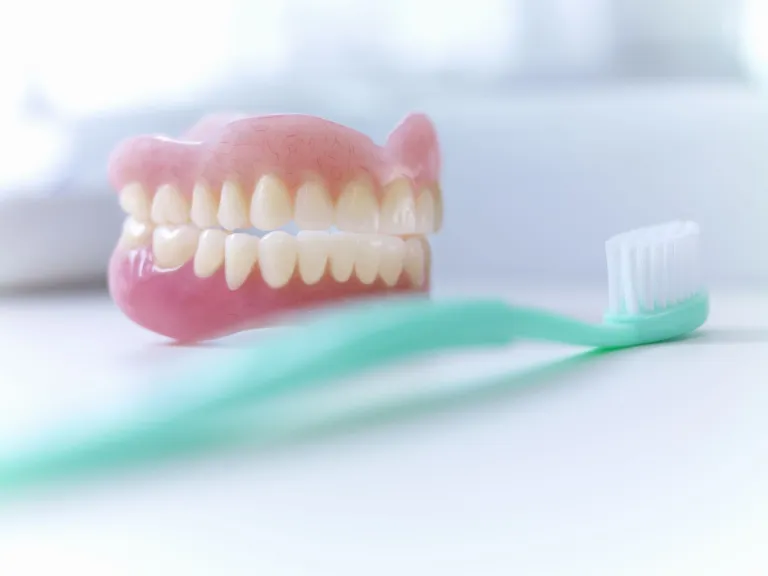
Dentures are false teeth made to replace teeth you have lost. They can be complete or partial; complete dentures cover your entire upper or lower jaw, whereas partial dentures replace one or a few teeth. Dentures may feel strange at first. Speaking and eating may feel slightly different. Be careful when wearing dentures, as they may make it difficult to feel warm/hot foods and liquids. In addition, you may not notice when you are biting down on something hard, such as a chicken or fish bone.
At first, your dentist may want to see you often to ensure that the dentures fit properly. Over time, your mouth will change and you may need to have your dentures adjusted or replaced. Be sure to let your dentist handle these adjustments; don’t try to do it on your own!
Caring for Your Dentures
- Keep your dentures clean and free from food that can cause stains, bad breath, or swollen gums.
- Brush them every day with a denture brush, but do NOT use toothpaste to clean your dentures, as this may wear them down.
- At night, take your dentures out of your mouth and place them in water with fluoride mouthwash or a denture cleaning product.
- If your dentures move too much in your mouth, denture adhesive may help.
In some cases, your dentist may suggest that you switch to dental implants. Implants are permanent, and they replace both roots and teeth.

Dental Implants
Dental implants offer a permanent, natural-looking solution for missing teeth by integrating directly with your jawbone to provide lifelong stability and prevent bone loss. Whether you need to replace a single tooth, bridge a gap, or undergo a full mouth reconstruction, our custom-designed implants act as artificial roots to support durable, aesthetic restorations. Discover how this modern technology can restore your confidence and dental health for years to come.
Bridges
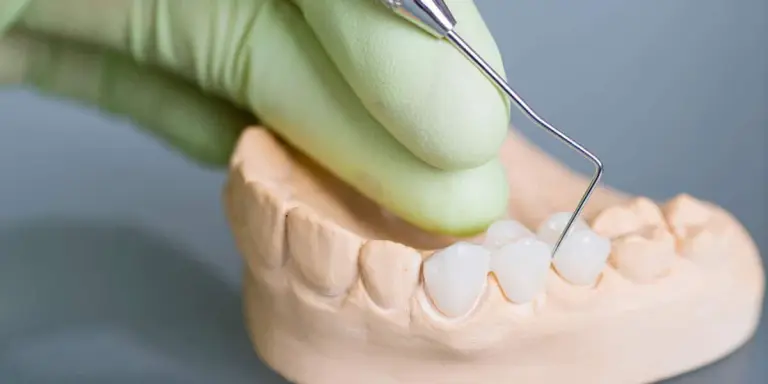
A bridge is made up of two or more crowns attached to each other that is used to replace missing teeth. It consists of anchor teeth on either side of a gap with a false tooth/teeth in between. The crowns can be made from gold, porcelain, or zirconia. Dental bridges can be supported by natural teeth or implants.

Extractions and Oral Pain Assessments
Oral pain can be very disruptive to nearly all aspects of your daily life. Difficulty chewing, bleeding, bad breath, and ulcers can be caused by a variety of issues. It’s important to address these issues as soon as you notice them.
You may need to have a tooth extracted for a number of reasons, such as decay, injury, or as part of an orthodontic treatment. Whatever the reason, you can have your extraction completed in our office. During the procedure, we will use an appropriate anesthetic to minimize any discomfort or pain.
Fillings
A filling is used to treat a small hole, or cavity, in a tooth. To repair a cavity, a dentist removes the decayed part of the tooth and then fills the space with a special restorative material.
Until recently, the 2 main types of filling materials were silver-colored (amalgam) and tooth colored (composite resin) restorative materials. In modern dentistry, we almost never use silver-colored filling material to restore a tooth, and we treat approximately 99.9% of cavities with composite resin filling material. Although amalgam is safe to use as a filling material, we now know that it will ultimately lead to damage of the tooth in the form of a fracture. This is due to the vastly different properties of the amalgam compared to the tooth.
Modern composite resin is not only just as durable as the old silver-colored amalgam, but it also provides strength through adhesion to the tooth structure. Composite resin also possesses very similar physical properties to tooth, further enhancing compatibility and longevity of the filling. Additionally, the color is so similar to the original tooth that it is often difficult to tell that a tooth even has a composite resin filling.
Crowns
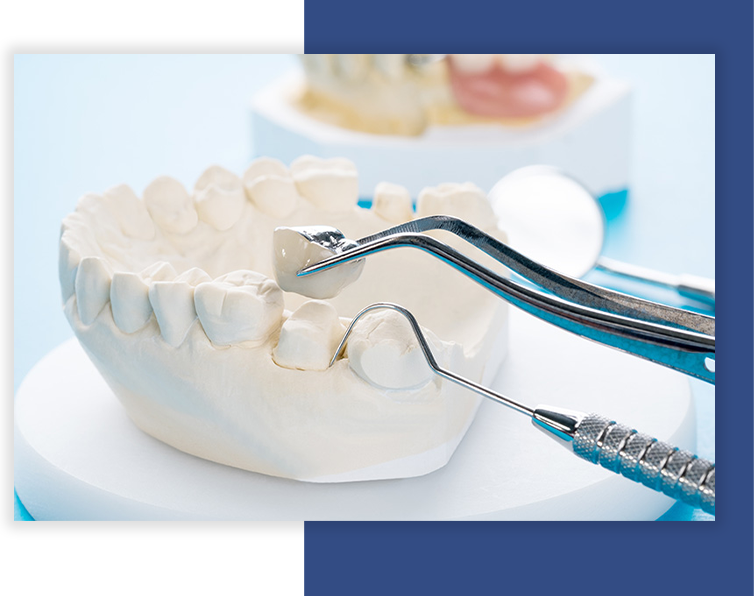
Occasionally, a tooth is too damaged to be repaired with just a simple filling. In these cases, a crown may be put on top of these teeth to protect them from breaking. Crowns can be made of gold, porcelain, zirconia, or stainless steel (which are almost always used on baby teeth).
There are typically two visits involved when preparing a crown. The first visit may involve taking X-rays to examine the roots of the tooth. If everything looks okay, the dentist will then numb the tooth and reshape it as needed to allow space for the new crown to fit properly. The dentist may also fill the tooth if needed to build it up and support the crown.
Once this is complete, the dentist will take an impression or digital scan of the tooth. We rarely use the goopy impression material in modern dentistry, and instead use a digital scanner, which is much faster and more accurate. The impression or scan is then sent to a lab to be made into a crown that is custom-fitted to your tooth. At this point, the doctor will place a temporary crown, as the real one may take a few weeks to be created. On your second visit, the dentist will remove your temporary crown and permanently cement your new custom-fitted permanent crown.
While you have your temporary crown, there are a few things you should consider:
- Be extra careful when flossing around your temporary crown
- Try to avoid chewing on that side as much as possible
- Avoid all sticky or chewy foods like chewing gum and caramel
- Avoid hard foods
The average crown will typically last anywhere from 10 to 20 years, or more, depending on the amount of wear and tear it endures. It is good practice to be mindful of your crown in order to get the longest life possible out of it. Avoid clenching or grinding your teeth often, chewing on ice or hard candy, and sticky foods like taffy or caramel on a regular basis. Avoiding these is not mandatory, but will provide greater longevity for your new permanent crown.